
TL;DR:
- An AI receptionist for Australian electricians answers every call, qualifies leads, and books jobs automatically, reducing missed revenue. It saves costs, improves customer experience, and handles high call volumes across Sydney, Melbourne, Brisbane, and Perth effectively. Adoption should be phased with training, integration, and ongoing reviews to maximize benefits and future AI expansions.
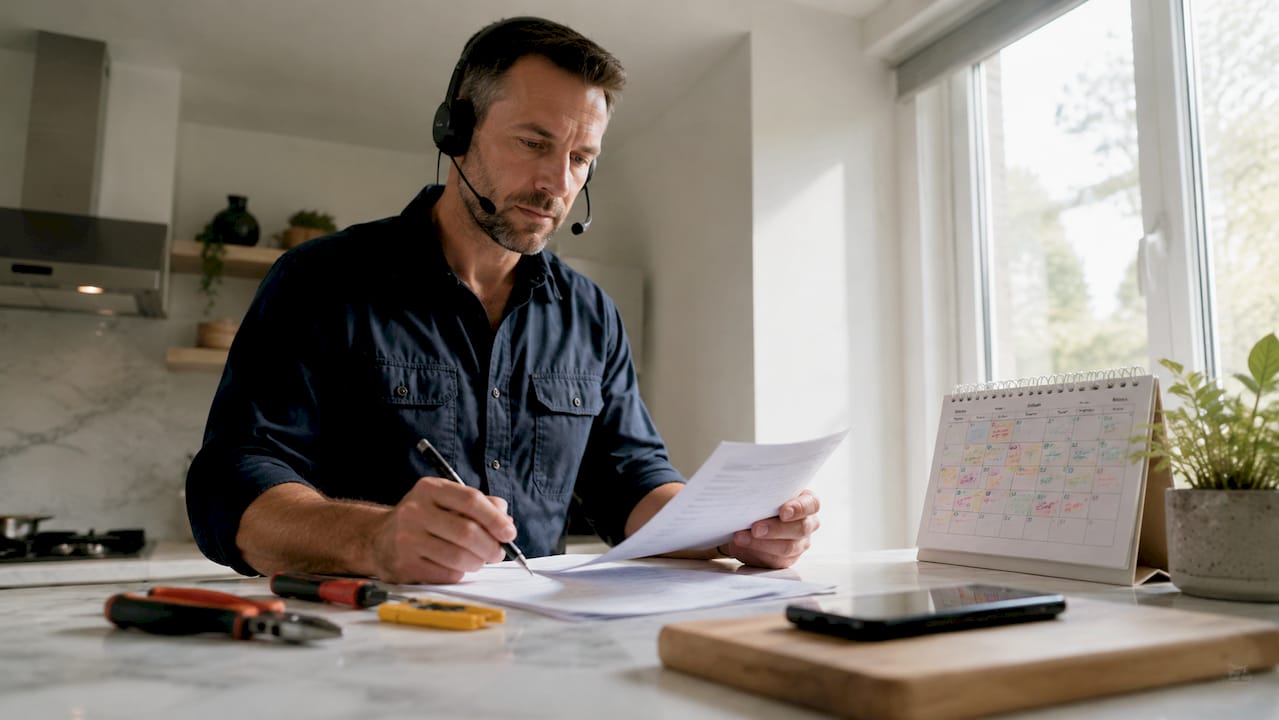
An AI receptionist for electricians Australia is a fully automated, 24/7 virtual assistant that answers every incoming call, qualifies leads, and books jobs directly into your calendar without any human involvement. Australian electricians miss approximately 40% of their incoming business calls, which translates to hundreds of thousands of lost enquiries daily across the trades sector. That figure represents real revenue walking out the door every time a call goes unanswered on a job site or after hours. Solutions from providers like Bookeverycall, SalesCaptain, Rivet CSR, and Omni AI are purpose-built to close that gap. This guide covers how these systems work, what they cost, and how electricians across Sydney, Melbourne, Brisbane, and Perth are putting them to use right now.
How does an AI receptionist work for electricians in Australia?
An AI receptionist for electricians operates as a digital assistant that picks up every call in under two seconds, speaks in a natural Australian voice, and handles the full conversation from greeting to confirmed booking. The technology sits between your phone number and your calendar, processing each call in real time without putting customers on hold or sending them to voicemail.
Call answering and lead qualification
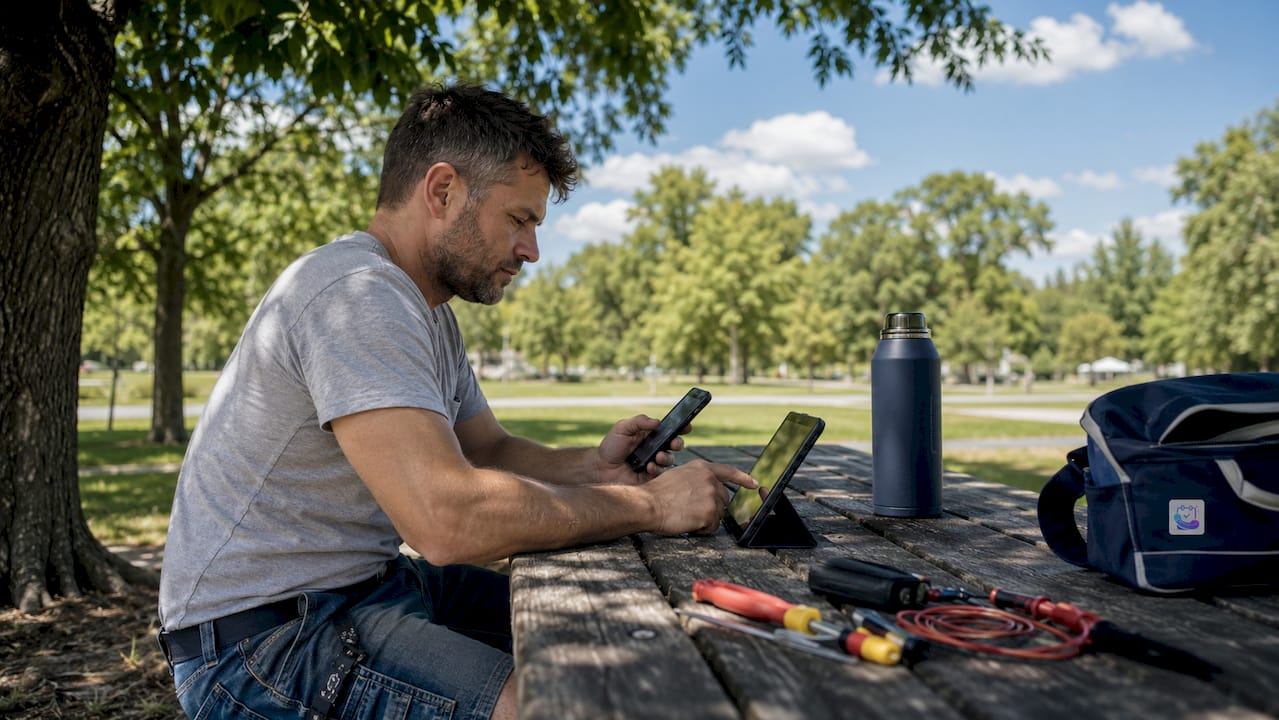
The first job of any virtual receptionist for electricians is to determine what the caller actually needs. A well-configured system asks targeted questions: Is this a residential or commercial property? Is there a safety hazard present? Is power completely out or is it a partial fault? Systems trained on electrical terminology like “load centre,” “GFCI,” and “switchboard upgrade” handle these conversations with far greater accuracy than a generic answering service. That accuracy matters because a caller describing a tripping safety switch needs a different response than someone requesting a quote for a new sub-board.
Rivet CSR treats their AI as a virtual customer service representative that performs deep qualification including job type, urgency level, and even photo requests before notifying the electrician. This approach cuts the back-and-forth that typically eats up 20 minutes per job before a single tool is picked up.
Automated scheduling and calendar sync
Once a call is qualified, the system books the appointment directly. AI receptionist systems integrate with popular Australian field service platforms including ServiceM8, HousecallPro, Salesforce, and HubSpot, which means the booking appears in your job management software without any manual data entry. For a sole trader running jobs across Brisbane’s northern suburbs, this removes the need to pull over and return calls between sites.
Emergency detection and escalation
Electricians deal with genuine emergencies: exposed wiring, complete power failures, and switchboard faults that create fire risk. A properly configured AI system detects urgency signals in the caller’s language and escalates immediately, either by calling the on-call electrician directly or sending an SMS alert with the caller’s details and location. This is not a feature you want to skip during setup.
Multichannel contact management
Modern automated receptionist solutions handle more than phone calls. SMS follow-ups, web chat enquiries, and missed call text-backs all fall within the scope of a fully managed system. A caller who hangs up before the AI answers receives an automatic SMS within seconds, which recovers a significant share of leads that would otherwise be lost entirely.
Pro Tip: Configure your AI system with at least three distinct call flows: one for after-hours emergencies, one for routine residential bookings, and one for commercial quote requests. This prevents the system from treating a sparking switchboard with the same urgency as a request for downlight installation.
AI receptionist vs traditional receptionist: which is better for electricians?
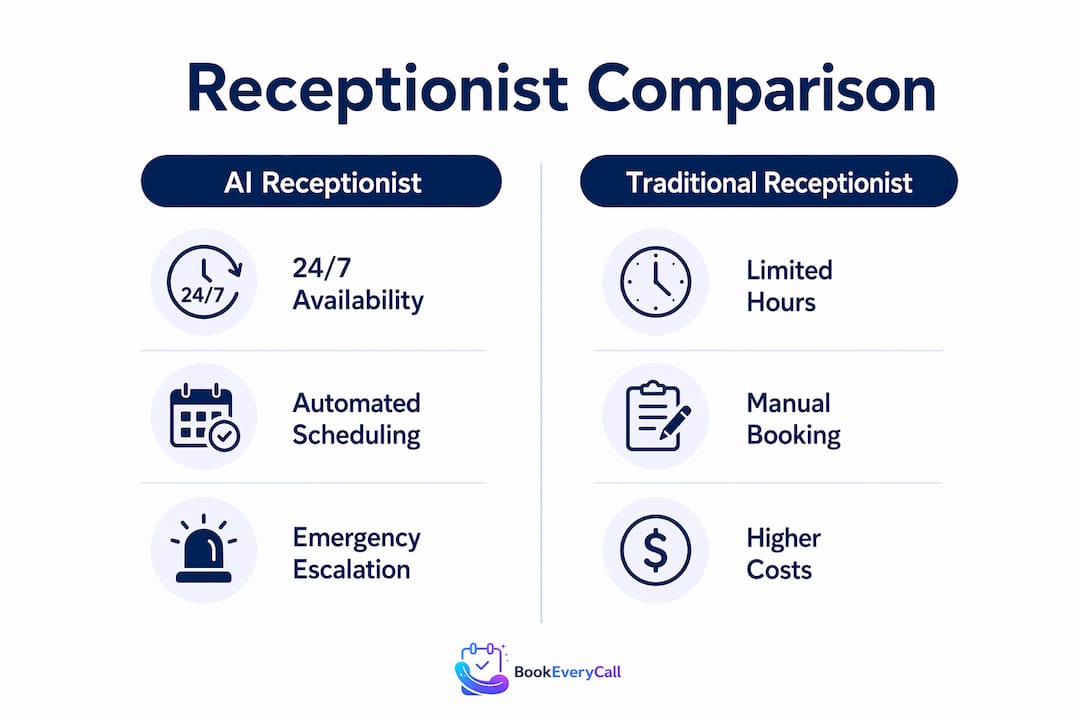
The cost difference between an AI receptionist and a full-time human receptionist is substantial. AI receptionist pricing runs at approximately $159 per month plus $0.12 per minute of call time, compared to a full-time receptionist costing between $35,000 and $45,000 annually in Australia. Even a part-time receptionist at 20 hours per week costs upwards of $20,000 per year once superannuation and leave entitlements are included.
| Feature | AI receptionist | Full-time receptionist | Traditional answering service |
|---|---|---|---|
| Availability | 24/7, including public holidays | Business hours only | After-hours only, limited |
| Monthly cost (AUD) | ~$159 plus usage | $2,900+ per month | $300–$800 per month |
| Lead qualification | Deep, customisable | Variable, depends on training | Basic message taking |
| Calendar integration | Automatic, real-time | Manual entry required | None typically |
| Emergency escalation | Configurable, instant | Depends on staff | Limited |
| Scalability | Handles unlimited calls | One call at a time | Limited concurrent calls |
The revenue recovery argument is equally compelling. Contractors using AI receptionists recovered an average of $11,000 in lost leads within the first 30 days of adoption. That figure alone covers more than five years of AI receptionist subscription costs at the pricing above.
Customer experience also shifts measurably. A caller who reaches a natural-sounding voice at 9:30 pm on a Saturday and gets a confirmed booking for Sunday morning is far more likely to leave a five-star review than one who leaves a voicemail and waits until Monday. The same early adopters reported a 4.2-times increase in five-star reviews within 90 days of deploying AI receptionist technology. For electricians competing in dense metro markets, that review volume directly affects Google ranking and inbound enquiry rates.
Scalability is a practical advantage that sole traders often overlook. A one-person electrical business and a 15-van fleet face the same problem during a busy period: calls pile up and some go unanswered. An AI system handles every concurrent call without degradation in quality, which means a sole trader in Perth can present the same professional front as a large contractor without hiring additional staff.
Pro Tip: Track your missed call rate for two weeks before switching to an AI receptionist. This gives you a baseline to measure revenue recovery against, and it makes the business case undeniable when you review the numbers at the 30-day mark.
Best practices when adopting AI receptionist technology
Adoption works best when it is phased rather than all-at-once. Starting with inbound call capture and emergency routing avoids automation bloat, which is the condition where an overly complex AI system produces hallucinations and incorrect responses that frustrate callers and damage your reputation. The recommendation from practitioners is to master core call handling before layering on additional features like automated quoting or payment collection.
Here are the key steps for a successful rollout:
- Audit your current call volume. Pull your phone records for the past 90 days and identify how many calls went unanswered, what times they occurred, and which days had the highest missed call rates. This data shapes your initial configuration.
- Train the AI on your specific services. An electrician in Melbourne’s inner suburbs offering EV charger installation and solar switchboard upgrades needs different call flows than a contractor in Adelaide focused on commercial fit-outs. Generic scripts produce generic results.
- Set up emergency escalation first. Before anything else, configure the system to detect and escalate genuine emergencies. This protects both your customers and your liability position.
- Integrate with your scheduling software. Whether you use ServiceM8, HousecallPro, or a simpler calendar tool, the booking integration is what converts a qualified call into a confirmed job without manual follow-up.
- Review call recordings weekly. AI systems improve with feedback. Listening to a sample of calls each week reveals where the system is misunderstanding callers or missing qualification opportunities.
- Comply with Australian privacy obligations. Under the Privacy Act 1988, businesses collecting personal information via automated systems must inform callers that their conversation is being recorded and how their data will be used. A brief disclosure at the start of each call satisfies this requirement.
- Maintain human oversight. An AI receptionist handles the volume, but a human should review escalated calls, complex enquiries, and any call the system flags as unresolved. Over-reliance on automation without periodic auditing creates blind spots.
Integrating with CRM platforms like Salesforce or HubSpot also allows you to track lead sources, measure conversion rates from call to booked job, and identify which types of enquiries are most profitable. This data becomes the foundation for smarter marketing spend over time.
How are Sydney, Melbourne, Brisbane, and Perth electricians benefiting?
Australian metro electricians face a specific set of pressures that make AI receptionist technology particularly valuable. High population density means more competition, faster customer expectations, and a higher volume of after-hours emergency calls. Evening and weekend calls represent a large share of total enquiries, and these are precisely the calls that go unanswered when a sole trader is on a job or off the clock.
| City | Key challenge | AI receptionist benefit |
|---|---|---|
| Sydney | High competition, premium service expectations | 24/7 booking captures after-hours leads before competitors |
| Melbourne | Dense suburban market, high call volumes | Concurrent call handling prevents queue abandonment |
| Brisbane | Rapid growth, new residential developments | Automated qualification filters high-value commercial leads |
| Perth | Geographic isolation, after-hours emergencies | Emergency escalation covers time-zone gaps and remote sites |
In Sydney, electricians operating across the inner west and northern beaches report that after-hours calls account for a disproportionate share of high-value jobs. A homeowner with a failed safety switch at 8 pm on a Friday will call three or four electricians in quick succession and book the first one who answers. An AI receptionist answers that call instantly, qualifies the urgency, and locks in the booking before the caller dials the next number on their list.
Melbourne’s electrical contractors face a different challenge: sheer call volume during peak periods. When a storm knocks out power across multiple suburbs simultaneously, a single electrician’s phone can receive dozens of calls within an hour. A virtual receptionist for electricians handles every call concurrently, triages by urgency, and queues non-emergency bookings for the following day without losing a single lead.
Brisbane’s growth corridor from the Sunshine Coast to the Gold Coast is generating consistent demand for new residential electrical work, solar installations, and EV charging infrastructure. Electricians who respond to enquiries within minutes rather than hours win a disproportionate share of this work. AI tools for electrical businesses that automate the first response give Brisbane contractors a measurable speed advantage over competitors still relying on voicemail.
Perth’s geographic isolation creates a specific after-hours problem. With a two-hour time difference from the eastern states and a large number of remote and regional job sites, Perth electricians frequently miss calls during transit or on-site work. Smart scheduling for electricians that operates independently of the tradesperson’s location ensures no enquiry goes cold regardless of where the job takes place.
Key takeaways
An AI receptionist for electricians Australia directly recovers lost revenue by answering every call, qualifying leads, and booking jobs automatically, at a fraction of the cost of a human receptionist.
| Point | Details |
|---|---|
| Missed call rate is critical | Australian electricians miss around 40% of calls, representing substantial daily revenue loss. |
| Revenue recovery is fast | AI adopters recover an average of $11,000 in lost leads within the first 30 days of use. |
| Cost advantage is significant | AI receptionist costs roughly $159 per month versus $35,000 or more annually for a full-time receptionist. |
| Phased adoption reduces risk | Start with inbound call capture and emergency routing before adding more complex automation features. |
| City-specific benefits are real | Sydney, Melbourne, Brisbane, and Perth electricians each face distinct challenges that AI receptionists directly address. |
Why I think most electricians are underestimating this technology
I have spent considerable time looking at how Australian trade businesses handle their phones, and the pattern is consistent. The electrician who is brilliant on the tools is often the same person who loses $50,000 or more in annual revenue simply because calls go unanswered between 6 pm and 7 am. That is not a skills problem. It is a systems problem.
What surprises me most is how many electricians still view an AI receptionist as a luxury rather than a cost of doing business. The maths do not support that view. When a single recovered emergency job on a Saturday night can generate $800 to $1,500 in revenue, the $159 monthly subscription pays for itself within the first week of operation. The scepticism I hear most often is that customers will notice they are speaking to an AI and hang up. The data does not back this up. Systems trained on natural Australian voices and electrical terminology handle calls with a level of professionalism that many human receptionists do not consistently deliver.
My practical advice is to treat the AI as a junior team member rather than a magic solution. It needs proper training, regular review, and clear escalation rules. An electrician who sets it up once and never revisits the configuration will get mediocre results. One who treats it as an ongoing part of their business operations will see compounding returns over time.
The future direction of this technology is worth watching. AI quoting, automated follow-up sequences, and integrated payment collection are all in development or early deployment across providers like SalesCaptain and Omni AI. Electricians who build familiarity with AI receptionist tools now will be far better positioned to adopt these extensions when they become standard practice. Those who wait will find themselves playing catch-up in a market where response speed is already the primary differentiator.
— Chay
How Bookeverycall helps electricians stop losing jobs
Bookeverycall is a fully managed AI receptionist for electricians operating across Australia, built specifically to capture and convert missed enquiries into confirmed bookings. The service answers every call 24/7, qualifies the lead using electrical-specific call flows, and books the job directly into your calendar. Bookeverycall integrates with ServiceM8, HousecallPro, and major CRM platforms, so there is no manual data entry between call and job. For electricians in Sydney, Melbourne, Brisbane, and Perth, the platform recovers up to $312,000 in annual revenue from calls that would otherwise go unanswered. Setup is straightforward, local support is included, and the system is configured to your specific services from day one. Visit bookeverycall.com to see how it works for your business.
FAQ
What is an AI receptionist for electricians?
An AI receptionist for electricians is an automated system that answers calls 24/7, qualifies leads based on job type and urgency, and books appointments directly into the electrician’s calendar without human involvement.
How much does an AI receptionist cost in Australia?
AI receptionist pricing typically starts at around $159 per month plus $0.12 per minute of call time, making it significantly more affordable than a full-time receptionist costing $35,000 to $45,000 annually.
Will customers know they are speaking to an AI?
Systems trained on natural Australian voices and electrical terminology are designed to conduct professional, conversational calls. Most callers focus on whether their problem is being solved quickly rather than who is answering.
Which scheduling software does an AI receptionist integrate with?
AI receptionist systems commonly integrate with ServiceM8, HousecallPro, Salesforce, and HubSpot, allowing bookings to appear automatically in your job management platform without manual data entry.
How quickly can an electrician set up an AI receptionist?
Most providers configure a basic system within one to three business days, covering inbound call answering, emergency escalation, and calendar integration. Full customisation for multiple call flows typically takes one to two weeks.
Permalink