

TL;DR:
- Many Australian businesses miss revenue by not answering after-hours calls driven by emergencies, convenience, and research timing.
- Automated systems and AI receptionists help capture, qualify, and respond to these leads 24/7, preventing loss and boosting income.
Customers call outside business hours because their needs, emergencies, and purchase decisions do not pause at 5pm. This is the core reality that separates businesses that grow from those that stagnate. Nearly half of real estate enquiries arrive outside traditional business hours, on Saturday evenings and late at night. The same pattern holds across trades, healthcare, and professional services. If your phone goes unanswered after hours, you are not just missing a call. You are handing a paying customer to your competitor.
Why customers call outside business hours: the real reasons
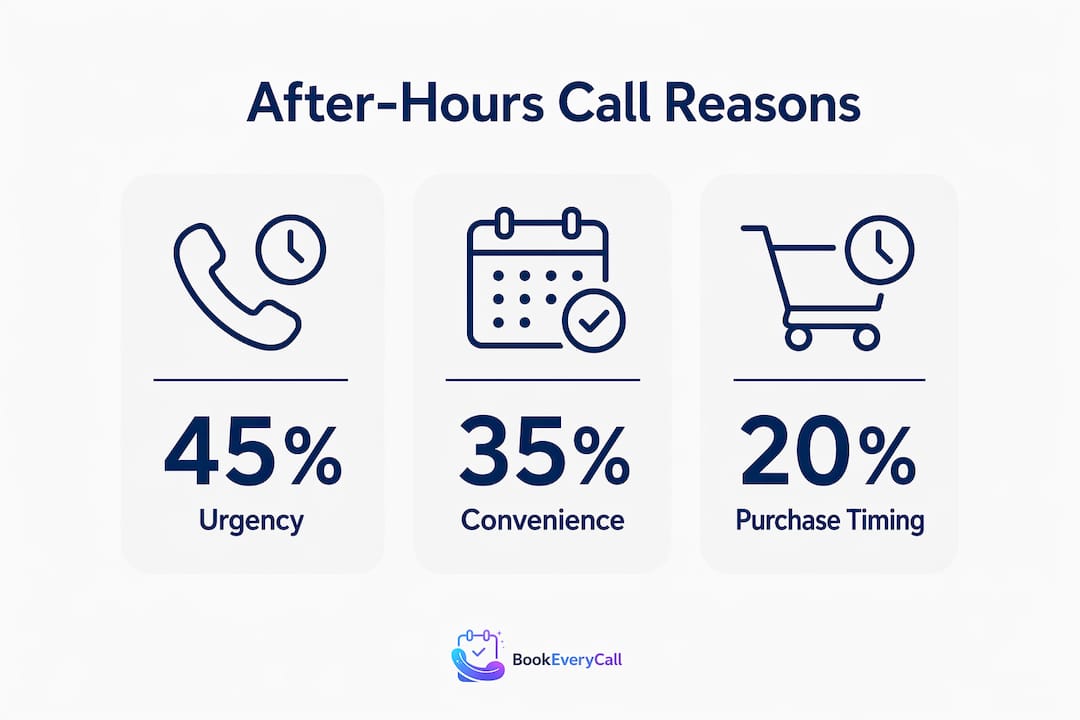
The industry term for this behaviour is “after-hours demand,” and it is driven by three forces: urgency, convenience, and research timing. Understanding each one changes how you staff, automate, and respond.
Urgency and emergencies
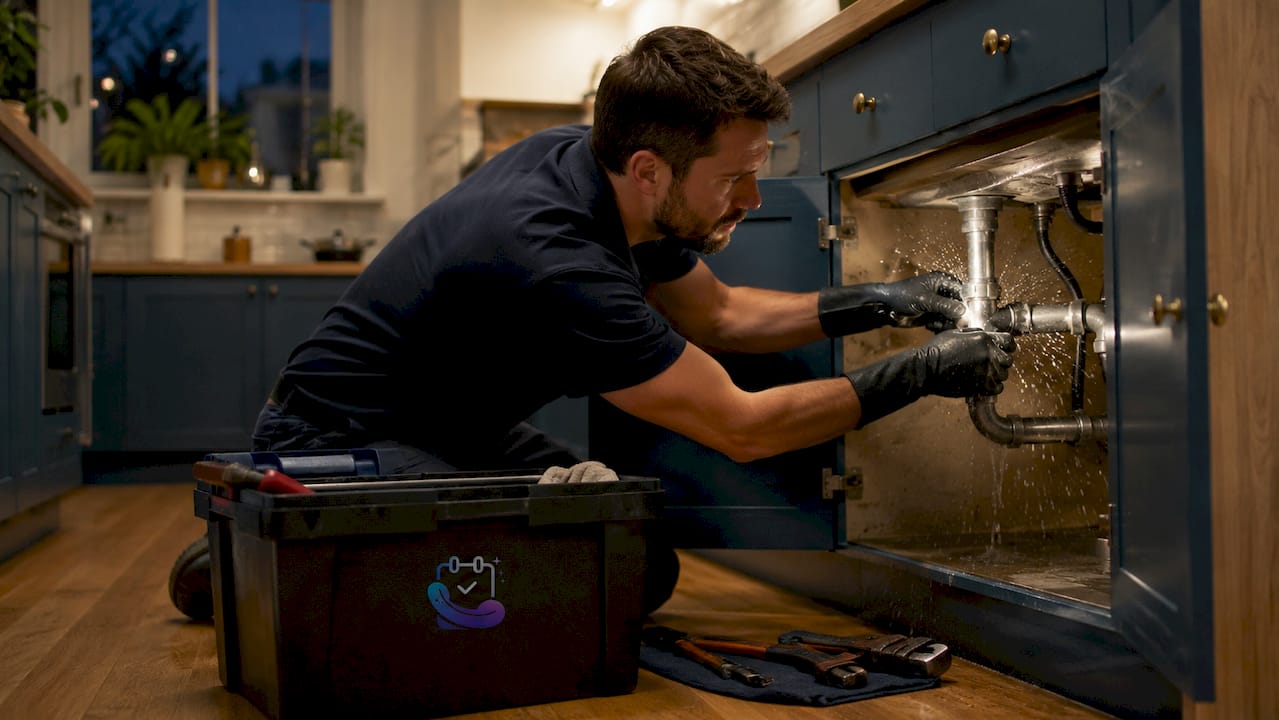
Emergencies do not follow a calendar. A burst pipe at 9pm, a power outage on a Sunday morning, or a child with a high fever at midnight all produce the same outcome: a customer picks up the phone and calls whoever can help. For tradies, this is the most common driver of after-hours calls. For healthcare providers, urgent symptoms, medication anxiety, and mental health support are the top reasons patients contact clinics outside office hours. These callers are not browsing. They are ready to commit to whoever answers first.
Convenience and personal schedules
Most Australians work during the day. That means the only time they can call a plumber, book a cleaner, or enquire about a property is after work, during lunch, or on weekends. This is not impatience. It is simple scheduling reality. A business owner who only accepts calls between 9am and 5pm Monday to Friday is invisible to a large portion of their potential customers.
Research and purchase decision timing
Late-night browsing is when many purchase decisions crystallise. A customer who has spent the evening comparing quotes, reading reviews, and watching videos will often call or submit an enquiry the moment they feel ready, regardless of the time. Modern consumers expect rapid responses when they are actively engaging with content, and businesses that do not respond quickly lose them to more responsive competitors. This shift in expectation is permanent, not a trend.
Pro Tip: Set up a 24/7 automated greeting that captures the caller’s name, number, and reason for calling. Even if you cannot respond immediately, you have the lead secured and can follow up first thing in the morning.
The industries most affected by after-hours demand include:
- Real estate: Weekend open homes drive evening enquiries from buyers and renters
- Trades (plumbing, electrical, HVAC): Emergencies and urgent repairs generate calls at all hours
- Healthcare: Patients seek reassurance and advice outside clinic hours
- Cleaning services: Residential and commercial clients book around their own schedules
- Automotive: Breakdowns and service bookings happen when customers have time
How do missed after-hours calls cost your business?
The financial cost of an unanswered call is concrete and measurable. Australian businesses lose substantial income from unanswered calls, with some losing thousands of dollars weekly due to poor after-hours responsiveness. Bookeverycall estimates that recurring missed calls can cost a business up to $312,000 annually. That figure is not theoretical. It is the compounded result of lost jobs, lost referrals, and customers who never return.
Speed matters as much as availability. Leads contacted within 5 minutes are 21 times more likely to convert than those contacted later. After a 5-minute delay, contact odds drop by roughly 80%. A customer who calls at 7pm and hears a voicemail will call the next business on their list within minutes.
Beyond direct revenue, missed calls damage brand reputation. Customers who cannot reach you after hours do not wait patiently. They leave Google reviews, tell friends, and choose competitors who answered. For small businesses in competitive local markets, this reputational cost compounds over time.
| Impact area | What it means for your business |
|---|---|
| Lost job bookings | Each missed call is a potential job that goes to a competitor |
| Reduced customer lifetime value | Customers who cannot reach you rarely return or refer others |
| Negative reviews | Unanswered calls are a common trigger for one-star reviews |
| Weakened competitive position | Responsive competitors capture your market share over time |
| Revenue leakage | Recurring missed calls can cost up to $312,000 annually |
The cost calculation is straightforward. Take your average job value, multiply it by the number of calls you miss each week, then multiply by 52. For a plumber with an average job value of $400 who misses five calls per week, that is $104,000 in potential annual revenue walking out the door.
What do after-hours call patterns look like across Australian cities?
After-hours call volume and customer behaviour vary across Australian cities due to local industry makeup and cultural norms. A tradie in Brisbane faces different peak call times than a property manager in Melbourne. Understanding your city’s patterns helps you allocate resources and set up automation where it counts most.
| City | Key industries driving after-hours calls | Common call timing |
|---|---|---|
| Sydney | Real estate, trades, professional services | Weekday evenings, Saturday mornings |
| Melbourne | Healthcare, trades, hospitality services | Friday evenings, Sunday afternoons |
| Brisbane | Construction, trades, property | Saturday mornings, weekday evenings |
| Perth | Mining support services, trades, retail | Early mornings, Saturday afternoons |
| Adelaide | Healthcare, small trades, retail | Weekday evenings, Sunday mornings |
Sydney’s property market is one of the most active in the country. Real estate agents in Sydney who do not answer evening enquiries lose buyers and renters to agencies that do. Melbourne’s healthcare sector sees consistent after-hours demand, particularly from families with young children seeking paediatric advice on weekends. Brisbane’s construction and trades sector generates strong Saturday morning call volumes, when homeowners are free to plan and book work. Perth’s time zone difference from the eastern states creates unique patterns, with some businesses receiving calls from interstate clients during what are effectively off-hours for Perth staff. Adelaide’s smaller market means each missed call carries proportionally higher weight for local businesses.
The practical takeaway is that after-hours demand is not uniform. A cleaning business in Melbourne and an electrician in Perth will have different peak windows. Mapping your own call data against these city patterns helps you prioritise when automation or live answering is most critical.
How can businesses manage after-hours calls effectively?
Effective after-hours call handling is not about being available for every call personally. It is about building a system that captures every enquiry, qualifies urgency, and routes the right calls to the right response. Strategies combining automation with human oversight reduce missed opportunities without burning out your team.
Here is a practical framework for Australian business owners:
Audit your current missed call rate. Pull your phone records for the past 90 days. Count calls received after 5pm and on weekends. Calculate how many went unanswered. This number is your baseline.
Set up an automated greeting immediately. Even a basic voicemail that captures name, number, and reason for calling is better than a ringing phone. Customers who leave a message are still in play. Customers who hang up are gone.
Deploy an AI voice receptionist for 24/7 coverage. AI conversational lead capture qualifies and routes leads instantly, any hour of the day. Tools like Bookeverycall’s AI voice receptionist answer calls, ask qualifying questions, and book appointments directly into your calendar without human involvement.
Define your urgency tiers. Not every after-hours call needs an immediate human response. A burst pipe is urgent. A quote request can wait until morning. Programme your AI or answering system to distinguish between the two and respond accordingly.
Integrate with your CRM and booking system. Every captured lead should flow automatically into your existing systems. Manual data entry after hours is a bottleneck that kills follow-up speed.
Communicate your after-hours process to customers. Add a note to your website, Google Business Profile, and email signature explaining how after-hours calls are handled. Customers who know what to expect are less likely to abandon the process.
Review and refine monthly. Track which after-hours calls converted, which were lost, and why. Use that data to adjust your routing rules and scripts.
Pro Tip: For tradies specifically, programme your after-hours system to ask three questions: What is the issue? Is it an emergency? What is your suburb? This lets you triage and respond to genuine emergencies within minutes, even outside business hours.
What practical steps can Australian business owners take right now?
The gap between knowing after-hours calls matter and actually capturing them is where most businesses lose money. These steps close that gap quickly.
- Claim and optimise your Google Business Profile. Set your hours accurately and add a phone number. Customers searching for services at 8pm will call the first result that looks open or responsive.
- Choose an AI receptionist built for Australian businesses. Look for systems that handle Australian accents, integrate with local booking platforms, and comply with Australian privacy law. Bookeverycall is purpose-built for this market.
- Test your own after-hours experience. Call your business at 7pm on a Tuesday. What happens? If you hear a generic voicemail or nothing at all, your customers are experiencing the same thing.
- Train your team on the handover process. When an AI system captures a lead overnight, your team needs a clear process for following up first thing in the morning. Speed on the follow-up call still matters.
- Measure cost per missed call, not just total missed calls. Multiply your average job value by your missed call count. This figure makes the business case for investment in after-hours solutions immediately clear.
- Start with your highest-value call window. If your data shows most after-hours calls come in between 5pm and 8pm on weekdays, focus your automation effort there first before expanding to overnight and weekend coverage.
The businesses that stop losing jobs after hours are not necessarily the largest or best-resourced. They are the ones that treat every unanswered call as a concrete revenue loss and build systems to prevent it.
Key takeaways
Customers call outside business hours because their needs, schedules, and purchase decisions do not align with traditional 9-to-5 availability, and businesses that fail to respond lose revenue, reputation, and customers permanently.
| Point | Details |
|---|---|
| After-hours demand is real and large | Nearly half of real estate enquiries arrive outside standard business hours. |
| Speed determines conversion | Leads contacted within 5 minutes convert at 21 times the rate of delayed responses. |
| Missed calls have a dollar value | Recurring missed calls can cost Australian businesses up to $312,000 annually. |
| City patterns differ | Sydney, Melbourne, Brisbane, Perth, and Adelaide each have distinct after-hours call peaks by industry. |
| Automation closes the gap | AI voice receptionists capture, qualify, and book leads 24/7 without human involvement. |
After-hours calls are where the real money is hiding
I have spoken with hundreds of Australian business owners who are convinced their biggest problem is marketing. They want more leads, more visibility, more enquiries. Then I ask them one question: what happens when someone calls your business at 6:30pm on a Thursday? The silence that follows tells me everything.
The uncomfortable truth is that most businesses already have enough leads. They are just losing them after hours. A plumber in Brisbane who misses four calls on a Saturday morning is not a marketing problem. He is an availability problem. The leads exist. The demand is there. The money is sitting in a voicemail inbox that nobody checks until Monday.
What I have found consistently is that businesses underestimate how permanent the damage is. A customer who calls and gets no answer does not call back the next day. They call your competitor, get an answer, book the job, and never think about you again. That customer is gone, along with every referral they would have sent you.
The rise of AI voice receptionists has changed the calculus entirely. For the first time, a sole trader or small business can offer the same responsiveness as a large company with a full reception team, at a fraction of the cost. The technology exists. The only question is whether you choose to use it before your competitors do.
My honest view: treating after-hours availability as optional is a decision to cede market share. The businesses that adapt now will be significantly harder to compete with in two years.
— Chay
How Bookeverycall handles after-hours calls for Australian businesses
After-hours enquiries represent real revenue. Bookeverycall’s AI voice receptionist answers every call 24/7, qualifies the caller’s needs, and books appointments directly into your calendar without you lifting a finger.
Whether you run a real estate agency, a trades business, or an allied health clinic, Bookeverycall captures the enquiries that would otherwise go to voicemail or a competitor. The system handles Australian accents, integrates with local booking platforms, and keeps your calendar full around the clock. Businesses using Bookeverycall report recovering thousands of dollars in previously lost weekly revenue. To see what after-hours call handling could mean for your bottom line, book a strategy call with the Bookeverycall team today.
FAQ
Why do customers call outside business hours?
Customers call outside business hours because emergencies arise at any time, personal schedules only allow calls after work, and purchase decisions often happen during evening research sessions. These are structural patterns, not exceptions.
What industries receive the most after-hours calls in Australia?
Real estate, trades (plumbing, electrical, HVAC), healthcare, cleaning, and automotive services receive the highest volume of after-hours calls in Australia, driven by emergency demand and customer scheduling constraints.
How much revenue do missed after-hours calls cost?
Bookeverycall estimates that recurring missed calls can cost Australian businesses up to $312,000 annually. The exact figure depends on average job value and weekly missed call volume.
How quickly do businesses need to respond to after-hours leads?
Leads contacted within 5 minutes are 21 times more likely to convert than those contacted later. After a 5-minute delay, the probability of making contact drops by approximately 80%.
What is the best way to handle after-hours calls for a small Australian business?
The most effective approach combines an AI voice receptionist with clear urgency triage and CRM integration. This captures every lead, qualifies urgency automatically, and ensures your team follows up on the highest-value enquiries first thing the next morning.