
TL;DR:
- Automated after-hours booking systems convert up to 60% of missed calls into confirmed reservations without increasing staffing costs. AI-driven solutions answer calls instantly, understand caller intent, and handle complete booking workflows, resulting in significant revenue gains. Implementing such systems reduces revenue leaks and boosts business margins, especially in trades, health, hospitality, and accommodation sectors.
After-hours booking success is defined as the consistent conversion of enquiries received outside normal business hours into confirmed appointments, jobs, or reservations through automated systems. 30–45% of inbound business enquiries occur after hours, yet most businesses lose nearly all of them to voicemail with a 76% abandonment rate. AI-driven systems convert 35–60% of those lost calls into real bookings. The examples of after-hours booking success covered here span hospitality, trades, health, and accommodation, with measurable results from Revmo AI, Kuhnic AI, and Twig AI front desk proving the model works at scale.
What makes an after-hours booking system successful?
The best after-hours booking systems share four non-negotiable traits: instant answer speed, accurate intent recognition, end-to-end booking capability, and zero increase in staffing costs. Without all four, conversion rates collapse.
Speed and intent recognition
AI front desks answer within 1–2 rings and achieve intent recognition above 90%. That combination matters because callers who reach voicemail abandon at a 76% rate and rarely call back. A system that answers fast and understands the caller’s need immediately keeps the conversation alive long enough to convert.
End-to-end booking workflows
Successful systems do not just take a message. They confirm dates, handle modifications and cancellations, collect deposits, and push confirmed bookings directly into a calendar or CRM. Platforms like SevenRooms integrate with AI voice layers to create a single booking record without manual data entry. This removes the friction that kills conversions at the final step.
No extra staffing required
After-hours bookings are incremental revenue. They do not shift daytime sales to the evening. They add net-new revenue that would otherwise go to a competitor. Automation handles the volume without adding a single staff member, which means the margin on every after-hours booking is higher than on a daytime booking that required staff time.
- AI answers within 1–2 rings, 24 hours a day, 7 days a week
- Intent recognition above 90% keeps conversations on track
- Bookings, modifications, and payments handled in one call
- Direct CRM and calendar integration removes manual follow-up
- No-show rates after hours match in-hours rates at approximately 7%
Pro Tip: Set your AI system to send an SMS confirmation immediately after every after-hours booking. Confirmation messages reduce no-shows and give customers confidence they are dealing with a professional operation.
Top 5 case studies: real examples of after-hours booking success
These five case studies span restaurants, salons, entertainment venues, hotels, and healthcare. Each one demonstrates measurable revenue from calls that would otherwise have gone unanswered.
1. Innovative Dining Group and Revmo AI
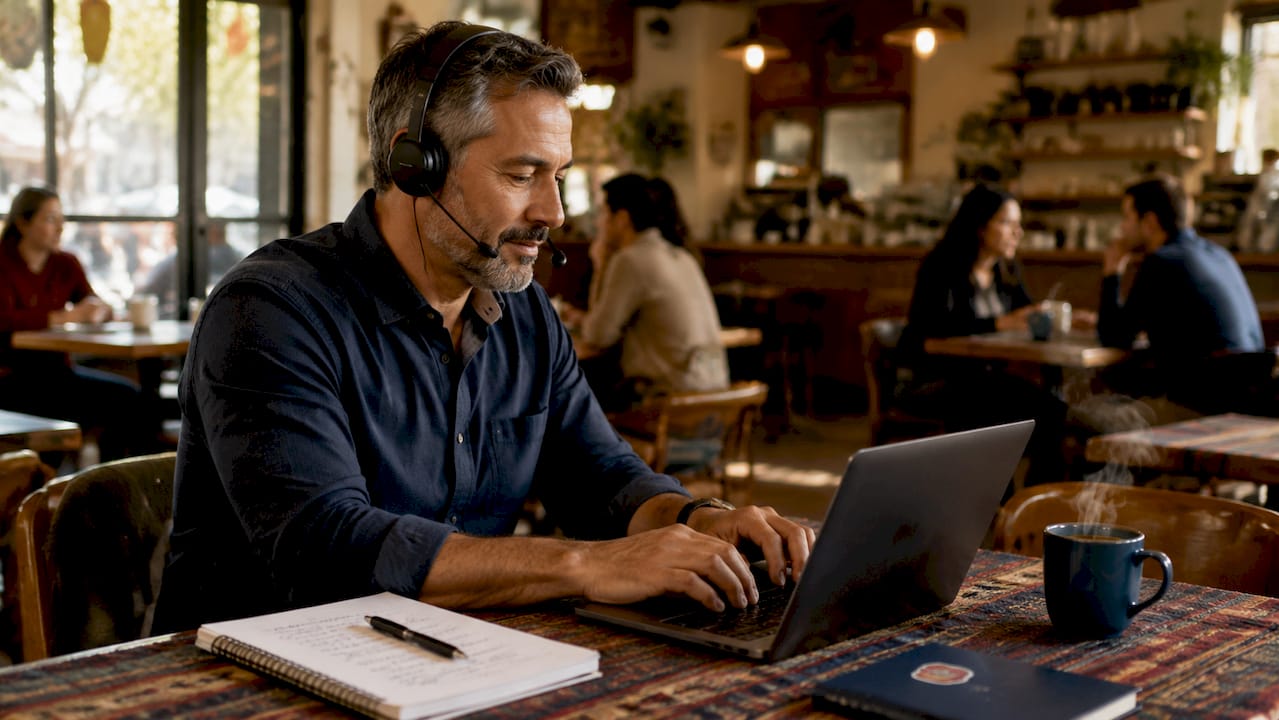
Innovative Dining Group is one of the clearest examples of late booking success on record. The group deployed Revmo AI across its restaurant portfolio and captured over 5,100 previously missed after-hours calls, converting them into 1,208 new reservations over four months. That is a conversion rate of roughly 24% on calls that previously produced zero revenue. The key factor was Revmo AI’s ability to handle full reservation workflows including party size, date, time, and special requests without any staff involvement.
2. Salon D’s 13.8x ROI in one month
Salon D is a strong after-hours appointment success story for small business owners. The salon added over $5,000 in monthly revenue without hiring additional staff, achieving a 13.8x return on investment in its first month of AI reception. Most of that revenue came from evening and weekend enquiries that previously went to voicemail. For a small business with tight margins, a 13.8x ROI in 30 days is not a projection. It is a documented outcome.
3. Trampoline park operator and Kuhnic AI
A leading trampoline park operator deployed Kuhnic AI to handle party bookings and achieved 98% data capture success across all after-hours calls. The AI reduced average booking duration from approximately 20 minutes to 12 minutes and enabled 24/7 live coverage. Critically, the system handled full party bookings end-to-end, including deposit payments, without any human involvement. This is the best example of how end-to-end AI booking systems that handle extras, upgrades, and payments during the call dramatically increase conversion rates.
4. Le Torri di Porsenna hotel and direct booking automation
Le Torri di Porsenna, a boutique hotel in Italy, focused on direct booking channels rather than relying on online travel agencies. The result was a 31% increase in direct bookings and a 20% reduction in OTA commission costs within one month. The strategy combined SEO, price-parity management, website improvements, and after-hours booking automation. For Australian accommodation operators in Adelaide, the Barossa Valley, or the Hunter Valley, this model is directly replicable. Reducing OTA commission by 20% on a $1 million annual revenue base saves $200,000 per year.
5. Dental practice with Twig AI front desk
A dental practice using Twig AI front desk increased after-hours bookings from 17 to 147 per month. That growth generated $42,250 in first-visit revenue every month from patients who previously could not book outside business hours. The practice did not hire additional reception staff. The AI handled every after-hours call, confirmed appointments, and sent reminders automatically. This case study is particularly relevant for health and wellness operators across Brisbane, Perth, and Sydney.
AI voice, SMS automation, or hybrid: which after-hours strategy wins?
Three main approaches exist for capturing after-hours bookings. Each suits a different business size, industry, and budget.
| Strategy | Best for | Conversion rate | Cost level | Key limitation |
|---|---|---|---|---|
| AI voice reception | Trades, health, hospitality | 35–42% | Medium | Requires voice AI setup |
| SMS auto-reply | Retail, low-complexity services | Low to moderate | Low | Cannot complete bookings |
| Hybrid (voice + chat + SMS) | Multi-location, hospitality | Highest | Medium to high | More complex to configure |
AI voice reception is the strongest performer for businesses where customers expect to speak to someone. AI front desks convert 35–42% of after-hours calls compared to just 5% for voicemail callbacks. That gap is the revenue difference between a business that grows and one that stagnates.
SMS auto-reply sets expectations and keeps the customer engaged, but it cannot close a booking on its own. A message that says “We are closed, book online at [link]” works for simple transactions. It fails for complex bookings like trades jobs, medical appointments, or multi-person restaurant reservations where the customer needs dialogue.
Hybrid models combine AI voice, chatbot, and SMS into a single after-hours funnel. A customer who calls after hours gets the AI voice receptionist. If they hang up before answering, an SMS fires automatically with a booking link. This approach produces the highest overall conversion rates and suits multi-location hospitality groups or large trade businesses.
- AI voice: best for trades, health, restaurants, and any business where customers expect a conversation
- SMS auto-reply: best as a fallback layer, not a primary booking channel
- Hybrid: best for businesses with high after-hours call volume across multiple locations
Pro Tip: Run a 30-day audit of your missed calls before choosing a strategy. If more than 40% of your missed calls occur after 5pm, AI voice reception will deliver the fastest return on investment.
After-hours booking strategies for Australian cities and industries
Australian SMBs experience 30–45% after-hours inbound demand, which makes missed call automation a direct competitive advantage. The right strategy varies by city and industry.
Sydney and Melbourne: hospitality and trades
Sydney and Melbourne restaurants, cafes, and bars receive a significant share of reservation enquiries after 9pm, when potential diners are planning their next outing. AI voice reception captures these calls and books tables directly into reservation systems. For tradies in both cities, a plumber or electrician who answers after-hours calls with an AI receptionist wins jobs that competitors miss. The best AI answering service for plumbers in Sydney converts an after-hours emergency call into a confirmed job within minutes, without the owner lifting a finger. Bookeverycall’s after-hours call answering for small business is built specifically for this market.
Brisbane and Perth: health and wellness
Health and wellness providers in Brisbane and Perth face a specific problem: patients and clients search for appointments in the evening after work, but reception closes at 5pm. A physiotherapy clinic, dental practice, or beauty salon that captures evening enquiries with AI reception fills its calendar faster than competitors who rely on online booking forms alone. The dental practice case study above, with 147 monthly after-hours bookings versus 17 previously, is a realistic outcome for Brisbane and Perth health operators.
Adelaide: accommodation and direct booking funnels
Adelaide’s accommodation sector, including wine region properties and boutique hotels, pays significant OTA commissions. The Le Torri di Porsenna model applies directly here. Combining after-hours AI reception with a direct booking funnel reduces OTA dependency and improves margin. A property generating $500,000 in annual revenue that cuts OTA commission by 20% saves $100,000 per year. That saving funds the AI system many times over.
Trades across Australia: never miss an emergency job
Electricians, HVAC technicians, and plumbers receive emergency calls at all hours. A missed after-hours call in this sector does not just lose a booking. It loses a customer permanently to the competitor who answered. Bookeverycall’s AI receptionist for electricians and HVAC operators are purpose-built for this scenario, qualifying the job, confirming urgency, and booking it directly into the tradie’s calendar.
Key takeaways
After-hours booking success requires AI-driven automation that answers instantly, completes bookings end-to-end, and converts 35–60% of previously lost calls into confirmed revenue without adding staff.
| Point | Details |
|---|---|
| After-hours demand is substantial | 30–45% of inbound enquiries arrive outside business hours and are mostly lost without automation. |
| AI voice outperforms voicemail by a wide margin | AI front desks convert 35–42% of after-hours calls versus just 5% for voicemail callbacks. |
| Revenue is incremental, not redistributed | After-hours bookings add net-new revenue and do not cannibalise daytime sales. |
| End-to-end automation drives the highest ROI | Systems that handle deposits, modifications, and confirmations in one call produce the best results. |
| Australian cities each have specific opportunities | Trades in Sydney and Melbourne, health in Brisbane and Perth, and accommodation in Adelaide all benefit from tailored after-hours strategies. |
Why after-hours automation changed how I think about business revenue
I used to think after-hours enquiries were a secondary concern. The real business happened during the day, and anything after 5pm was overflow. That view cost businesses I worked with a significant amount of money before I understood what was actually happening.
The shift came when I looked at the data properly. When you see that nearly half of all inbound enquiries arrive outside business hours and that 76% of those callers abandon without leaving a message, you realise the problem is not a minor inefficiency. It is a structural revenue leak. Every day a business operates without after-hours automation, it is handing a chunk of its potential revenue to whoever answers the phone.
What surprised me most was the incremental nature of the revenue. I expected after-hours bookings to cannibalise daytime ones. They do not. The customers calling at 9pm are not the same ones who would have called at 2pm. They are additional customers. That means every after-hours booking is pure margin gain.
The businesses that implement AI reception and then check their numbers after 90 days are consistently surprised by the volume. A dental practice going from 17 to 147 after-hours bookings per month is not an outlier. It is what happens when you stop sending callers to voicemail. The technology is not complicated. The decision to implement it is the hard part, and most business owners delay it far longer than they should.
My practical advice: start with a 30-day missed call audit. Count how many calls arrive after 5pm and on weekends. Multiply that number by your average job or booking value. That figure is your current monthly revenue leak. Once you see it as a dollar amount, the decision to automate becomes straightforward.
— Chay
How Bookeverycall captures your after-hours revenue
Bookeverycall operates as a fully managed AI receptionist for Australian businesses, answering every call 24 hours a day, 7 days a week, qualifying enquiries, and booking jobs directly into your calendar.
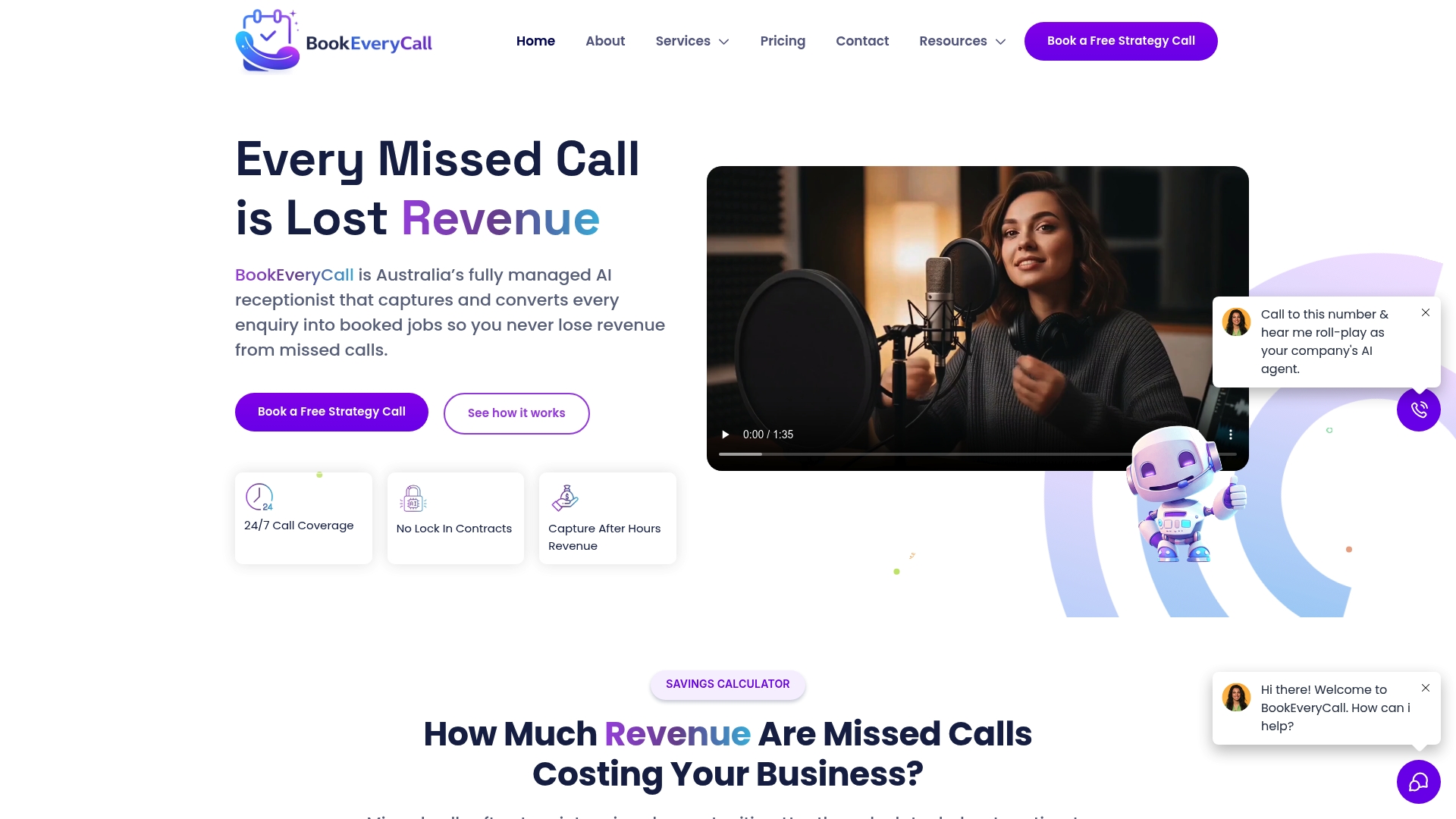
The Voice AI service handles the full booking workflow, from first answer to confirmed appointment, without any staff involvement. Bookeverycall works across trades, health, hospitality, and property management, with purpose-built solutions for electricians, HVAC operators, mechanics, and cleaning businesses. Australian businesses using Bookeverycall recover up to $312,000 in annual revenue from calls that previously went unanswered. If you want to see what your missed call volume is actually costing you, calculate your revenue loss and then book a strategy call to see the system in action.
FAQ
What is after-hours booking success?
After-hours booking success is the consistent conversion of customer enquiries received outside normal business hours into confirmed bookings or jobs through automated systems. AI-driven reception achieves conversion rates of 35–60% on calls that would otherwise go to voicemail.
How much revenue do missed after-hours calls cost Australian businesses?
The cost depends on call volume and average job value, but businesses with recurring missed calls can lose up to $312,000 annually according to Bookeverycall. With 30–45% of inbound enquiries arriving after hours and a 76% voicemail abandonment rate, the cumulative loss is substantial.
Which industries benefit most from after-hours booking automation?
Trades, health and wellness, hospitality, and accommodation see the strongest results. A dental practice increased after-hours bookings from 17 to 147 per month using AI reception, while restaurants and trampoline parks have documented similar gains.
Is AI voice reception better than SMS auto-reply for after-hours bookings?
AI voice reception converts 35–42% of after-hours calls compared to a much lower rate for SMS-only approaches. SMS works as a fallback layer but cannot complete complex bookings. For trades, health, and hospitality, AI voice is the primary channel.
How quickly can an Australian business set up after-hours AI reception?
Setup timelines vary by provider, but most AI reception systems for Australian SMBs can be configured and live within a few days. Bookeverycall offers a fully managed setup, meaning the business owner does not need to configure the system themselves. See the 2026 setup guide for a full walkthrough.