

TL;DR:
- A real estate enquiry management checklist organizes lead capture, qualification, follow-up, and conversion to prevent missed opportunities. Speed and persistence in follow-up are crucial, with responses within five minutes and 7 to 12 contact attempts over three weeks improving conversion rates. Automated systems and city-specific strategies enhance efficiency, ensuring agents maintain accountability and build long-term client relationships.
A real estate enquiry management checklist is a structured system that organises every step of lead capture, qualification, follow-up, and conversion into a repeatable process agents can trust. Without one, leads fall through the cracks, response times blow out, and revenue disappears quietly. Australian real estate markets are competitive enough that a single missed enquiry can cost thousands of dollars in lost commission. The right real estate enquiry management checklist turns a chaotic inbox into a predictable pipeline, giving your team clear ownership, defined deadlines, and measurable results at every stage.
1. What does a real estate enquiry management checklist include?
An effective real estate enquiry management checklist covers six core areas: lead capture, qualification, assignment, follow-up cadence, pipeline tracking, and accountability. Each area needs defined steps, not just good intentions. Teams that skip even one area consistently lose leads they could have converted.

The checklist begins at the moment an enquiry arrives, whether from a portal like realestate.com.au, a direct website form, a phone call, or a social media message. Every source feeds into one central CRM. From there, the checklist governs what happens next, who owns it, and when the next action is due.
Pro Tip: Build your checklist inside your CRM so every step triggers a task automatically. A checklist that lives in a document nobody opens is not a system. It is a wish list.
2. Capture only the right qualifying questions
Effective lead capture forms ask only 4–6 high-impact qualifying questions, covering timeline, financing status, and specific property criteria. Asking more than six questions reduces form completion rates without improving lead quality. Asking fewer than four leaves agents without enough data to prioritise.
The six questions that matter most in Australian residential real estate are: purchase or rental intent, suburb or area preference, budget range, timeline to move, financing status (pre-approved or not), and preferred contact method. These six data points let you route the lead to the right agent and set the right follow-up priority within seconds of the enquiry arriving.
Avoid open-ended questions at the capture stage. Save those for the first phone call. The form’s job is to qualify and route, not to conduct a needs analysis.
3. Respond within 60 seconds
Responding within 5 minutes makes an agent 100 times more likely to reach a lead compared to waiting 30 minutes. That figure alone should rewrite how your team treats every new enquiry. Automated follow-up systems now engage leads within 60 seconds, sending an SMS or email acknowledgement before a human agent is even available.
Speed matters because property buyers and renters are browsing multiple listings simultaneously. The agent who responds first earns the conversation. The agent who responds an hour later often finds the lead has already booked an inspection elsewhere.
Automated immediate responses do not replace human contact. They hold the lead’s attention until a person can call. Set your CRM to trigger an instant SMS confirmation, then assign the lead to an agent with a 5-minute call deadline.
4. Assign clear ownership with a deadline
Assigning lead ownership with mandatory next-action deadlines prevents leads from sitting in a shared inbox with no one responsible. Every enquiry must have one owner and one next action with a specific due time. Without this, leads go “active forever” and never convert.
XCEED CRM and similar platforms enforce this by requiring agents to log a next action before closing any lead record. This single rule eliminates the most common failure point in real estate enquiry management: the lead that everyone assumed someone else was handling.
Accountability is not a cultural value. It is a system design. Build the deadline into the workflow so the CRM enforces it, not the manager.
5. Follow up 7 to 12 times over 14 to 21 days
Converting the majority of viable leads requires 7 to 12 touchpoints spread across 14–21 days. Most agents stop after one or two attempts and assume the lead is dead. That assumption costs them the bulk of their potential conversions.
A structured follow-up cadence looks like this:
- Day 1, within 5 minutes: Automated SMS acknowledgement plus phone call from assigned agent.
- Day 1, within 2 hours: Follow-up email with relevant listings or property information.
- Day 2: Second phone call attempt, voicemail if no answer.
- Day 3: Personalised SMS referencing the specific property or suburb they enquired about.
- Day 5: Email with new or similar listings.
- Day 7: Phone call attempt, third contact.
- Day 10: SMS check-in asking if their search criteria have changed.
- Day 14: Email with market update relevant to their area of interest.
- Day 17: Phone call, fourth attempt.
- Day 21: Final SMS for this cycle, offering to schedule a call at their convenience.
After day 21, move the lead to a long-term nurture sequence. Do not delete them. Long-term relationship building over months is the difference between a one-time contact and a future client.
Pro Tip: Use your CRM’s task automation to schedule every touchpoint at the moment the lead is created. Manual scheduling means touchpoints get skipped when agents are busy.
6. Match your contact method to lead age
Fresh inbound leads require immediate phone-first contact, while aged leads benefit from softer, text-first approaches that respect their readiness. This distinction is one of the most overlooked elements in a real estate enquiry follow-up system.
A lead who submitted a form 10 minutes ago is in active decision mode. Call them immediately. A lead from three weeks ago who never responded to your first two attempts is in a different mental state. An aggressive phone call feels intrusive. A low-pressure SMS asking if their situation has changed gets a far better response rate.
Segment your leads by age inside your CRM and apply different follow-up templates to each group. This is not about being less persistent. It is about being appropriately persistent.
7. Route leads by price, location, and source
Lead routing by attributes like price point, location, and lead source prevents high-intent enquiries from being buried under low-priority ones. A $2 million buyer enquiry from a direct referral should not sit in the same unfiltered queue as a general rental inquiry from a portal.
Set routing rules in your CRM that automatically assign leads based on these criteria. A buyer enquiring about properties above $1.5 million in Sydney’s eastern suburbs goes directly to your senior sales agent. A rental enquiry for a two-bedroom unit in Brisbane’s inner north goes to your property management team. Routing removes the manual triage step and cuts response time significantly.
Managing enquiry workflows as operational systems rather than just CRM databases is what separates high-volume agencies from those that struggle with lead leakage. The routing logic is the engine of that system.
8. Track every lead through defined pipeline stages
Every enquiry needs a visible status in your pipeline. The standard stages for a real estate enquiry management checklist are: New, Contacted, Qualified, Appointment Booked, Inspection Completed, Offer Made, and Closed. Each stage has a clear definition and a maximum time limit before escalation.
Pipeline visibility lets managers spot bottlenecks in real time. If 40 leads are sitting in “Contacted” for more than five days, that is a follow-up discipline problem. If 20 leads are stuck in “Qualified” for two weeks, that is a booking conversion problem. The pipeline makes the problem visible so you can fix it.
Review your pipeline weekly as a team. Leads that have not moved in seven days need a specific next action assigned before the meeting ends.
9. Use automation to handle volume without losing quality
Automated tools handle the parts of enquiry management that do not require human judgement: acknowledgement messages, follow-up reminders, appointment confirmations, and lead status updates. This frees agents to focus on conversations that actually require skill and relationship building.
Key automation tools for Australian real estate teams include:
- CRM automation: Platforms like HubSpot, Salesforce, and Rex Software trigger tasks, emails, and SMS messages based on lead actions and time delays.
- AI receptionists: Solutions like Bookeverycall’s real estate AI receptionist answer calls 24/7, qualify leads, and book inspections directly into agent calendars.
- Missed call recovery: Missed call AI tools send an immediate SMS to any caller who does not reach a live agent, capturing the lead before they call a competitor.
- Appointment booking automation: AI-powered booking tools confirm inspection times, send reminders, and reduce no-shows without agent involvement.
| Task | Manual process | Automated process |
|---|---|---|
| Initial acknowledgement | Agent sends email within 1 hour | SMS sent within 60 seconds automatically |
| Follow-up reminders | Agent remembers or forgets | CRM triggers task at scheduled intervals |
| After-hours enquiries | Missed until next business day | AI receptionist captures and qualifies immediately |
| Appointment confirmation | Agent calls to confirm | Automated SMS and email sent 24 hours prior |
| Lead status updates | Manual data entry | CRM updates on agent action |
Bookeverycall claims to help Australian businesses recover up to $312,000 annually in lost revenue from missed calls. For a busy real estate office handling high enquiry volumes, that figure reflects the real cost of letting calls go unanswered during inspections, after hours, or on weekends.
10. City-specific enquiry management for Australian markets
Australian real estate markets are not uniform. Enquiry volume, buyer behaviour, and competition vary significantly between Sydney, Melbourne, Brisbane, Perth, and Adelaide. Your property management checklist needs to reflect these differences.
- Sydney: High enquiry volumes and intense competition mean response speed is non-negotiable. Agents in Sydney’s inner suburbs regularly compete against five or more other agents for the same buyer. Automated instant responses and advanced CRM routing are minimum requirements, not optional extras.
- Melbourne: Melbourne’s diverse market, from inner-city apartments to outer suburban family homes, requires segmented routing rules. A one-size-fits-all follow-up sequence performs poorly here. Tailor your cadence by property type and suburb.
- Brisbane: Brisbane buyers tend to respond well to relationship-based communication. A slightly longer nurture sequence with more personalised content outperforms aggressive call-heavy approaches. The market rewards agents who feel like advisers rather than salespeople.
- Perth: Perth’s market has seen significant price growth in recent years, attracting interstate investors alongside local buyers. Enquiries from interstate buyers require a different follow-up approach, including virtual inspection offers and detailed suburb reports sent early in the sequence.
- Adelaide: Adelaide’s smaller market means agents often know their buyers personally or through referral networks. Combining light automation for acknowledgement and reminders with genuinely personal follow-up calls works better here than a fully automated sequence.
Adjust your routing rules, follow-up templates, and response time targets to match the expectations of buyers and renters in each city. A checklist built for Sydney will underperform in Adelaide if applied without modification.
Key takeaways
A real estate enquiry management checklist converts lead chaos into a predictable pipeline by combining fast response, structured qualification, persistent follow-up, and clear accountability at every stage.
| Point | Details |
|---|---|
| Speed is the top priority | Responding within 5 minutes makes agents 100 times more likely to reach a lead. |
| Qualify with 4–6 questions | Short, focused capture forms improve lead quality and routing speed. |
| Follow up 7–12 times | Most viable leads convert only after consistent contact over 14–21 days. |
| Automate repetitive steps | Use CRM automation and AI receptionists to handle volume without missing leads. |
| Adapt by city and lead age | Tailor follow-up style and cadence to local market conditions and lead freshness. |
What I have learned from watching agencies get this wrong
The most common mistake I see real estate teams make is treating their CRM as a storage system rather than a workflow engine. They log enquiries, add a note, and move on. Two weeks later, a hot lead has gone cold because nobody scheduled a second call. The checklist exists to prevent exactly that, but only if the team actually uses it.
The second mistake is abandoning leads too early. Most agents stop after one or two attempts and write the lead off as unresponsive. The data says otherwise. The majority of conversions happen between touchpoint five and touchpoint ten. Agents who give up at two are leaving their best leads for competitors who are willing to be more persistent.
The third mistake is confusing automation with impersonality. Automated messages are not cold by definition. A well-written SMS that references the specific suburb a buyer enquired about feels personal even when it was triggered by a CRM rule. The content determines the tone, not the delivery mechanism.
Well-structured enquiry handling is ultimately about behavioural discipline, not just technology. The checklist is the structure. The team’s commitment to following it is what makes it work. I have seen agencies with basic CRM setups outperform agencies with expensive platforms because the first team actually used their system every day.
Build your checklist, put it inside your CRM, train your team on it, and review it weekly. That combination beats any single tool or tactic on its own.
— Chay
How Bookeverycall helps real estate teams capture every enquiry
Real estate agencies lose leads every day to missed calls during inspections, after-hours enquiries, and peak periods when agents are unavailable. Bookeverycall’s AI receptionist for real estate answers calls 24/7, qualifies enquiries, and books inspections directly into agent calendars without human involvement.
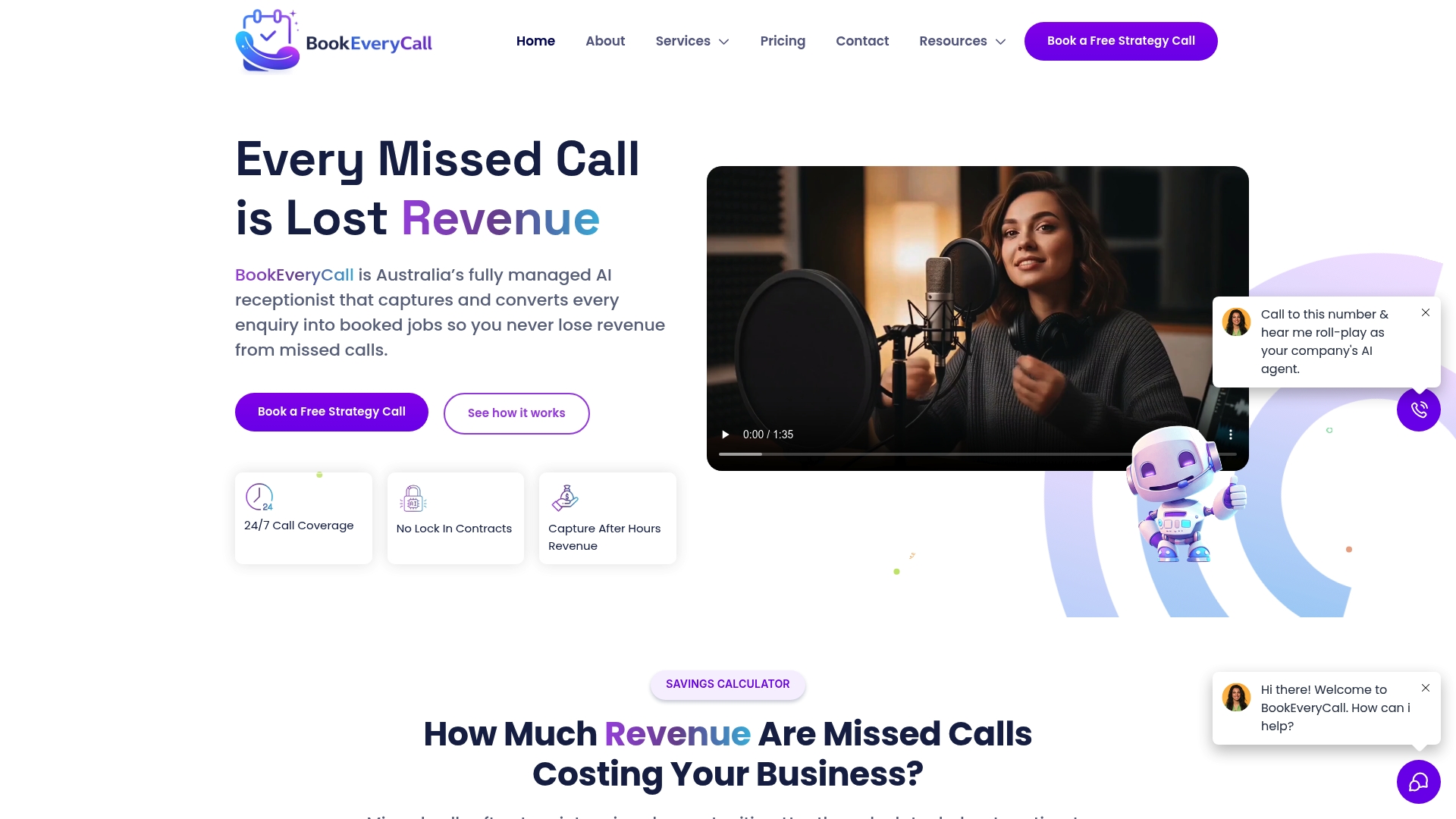
The system handles instant follow-ups, call qualification, appointment scheduling, and review automation, covering the exact steps your enquiry management checklist demands. For Australian agencies managing high volumes across multiple listings, Bookeverycall removes the gap between a missed call and a lost client. Book a strategy call at bookeverycall.com to see how it fits your team’s workflow.
FAQ
What is a real estate enquiry management checklist?
A real estate enquiry management checklist is a step-by-step system covering lead capture, qualification, assignment, follow-up, and pipeline tracking. It gives every team member a defined process to follow from the moment an enquiry arrives to the point of conversion.
How quickly should agents respond to a new enquiry?
Agents should respond within 5 minutes. Responding within 5 minutes makes an agent 100 times more likely to reach the lead compared to waiting 30 minutes.
How many follow-up attempts does it take to convert a real estate lead?
Most viable leads require 7 to 12 touchpoints over 14–21 days. Agents who stop after one or two attempts miss the majority of their potential conversions.
What enquiry management tools do Australian real estate teams use?
Australian real estate teams commonly use CRM platforms like Rex Software, HubSpot, and Salesforce alongside AI receptionist tools like Bookeverycall for after-hours call handling and automated appointment booking.
How does automation fit into a real estate enquiry follow-up system?
Automation handles acknowledgement messages, follow-up reminders, appointment confirmations, and lead routing, freeing agents to focus on high-value conversations. It does not replace personal contact. It makes sure personal contact happens at the right time.